Lead With Heart: How Fun, Belonging, and Celebration Make Change Possible
Aug 13, 2026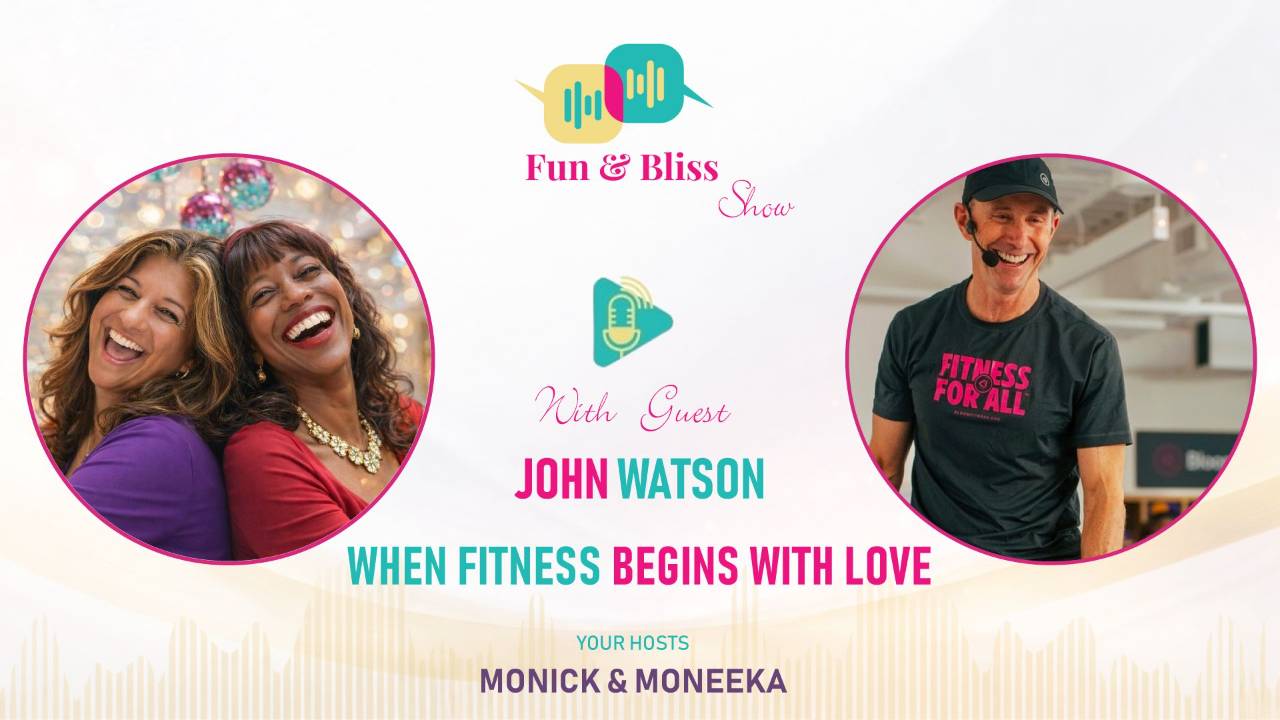
What if people do not need to be pushed harder to create lasting change?
What if they need to feel welcomed, valued, and excited to participate?
In this heartfelt episode of The Fun & Bliss Show, Monick Halm and Moneeka Sawyer sit down with John Watson, founder and president of Bloom Fitness, a nonprofit bringing accessible and joyful fitness programs to people with intellectual and developmental disabilities.
After a successful 32-year career in mortgage banking, John retired and found himself being led toward an entirely different purpose by his daughter, Emma, who has a rare genetic disease called Leukodystrophy.
As Emma grew older, John saw how few resources were available to adults with intellectual and developmental disabilities once they aged out of the school system. What began as a desire to help eventually became Bloom Fitness, which now offers inclusive fitness classes at approximately 50 locations across seven states.
John shares how Bloom’s athletes taught him to listen, why emotional connection creates meaningful change, and why fun must come before fitness.
This conversation is a moving reminder that everyone deserves dignity, belonging, encouragement, and the opportunity to feel proud of what they accomplish.
In This Episode, We Talk About
-
How John’s daughter Emma led him to his life’s most meaningful work
-
The challenges families face when adults with intellectual and developmental disabilities age out of school-based services
-
How an unused room filled with broken fitness equipment inspired Bloom Fitness
-
Why John began without a formal plan and allowed Bloom’s athletes to guide its development
-
The gold-star experiment that became Bloom’s goal and recognition system
-
Why Bloom calls its class members athletes
-
The importance of treating adults with IDD with dignity and respect
-
What “Lead with heart” means inside a Bloom Fitness class
-
Why emotional connection can inspire people to change their behavior
-
Why Bloom prioritizes safety, fun, community, encouragement, and health before fitness
-
How fun and belonging help athletes push themselves without being pressured
-
Why progress must happen according to each athlete’s individual timeline
-
How fitness can build confidence that carries into employment, relationships, and everyday life
-
The joy John receives from helping others and the power of the giver’s high
-
Why connecting with people who are different from us can teach us more about ourselves
-
The unexpected gifts Emma has brought to John, his family, and thousands of other people
Your Fun & Bliss Spark
Choose one change you would like to make and connect it to something that truly matters to you.
Instead of focusing only on the result, ask yourself:
Why does this matter to me?
Maybe you do not love exercising, but you want the energy to play with your children or grandchildren.
Maybe trying something new feels frightening, but you want to experience more freedom, confidence, or joy.
Connect the change to the person, feeling, or purpose behind it. Then give yourself permission to experiment, make mistakes, and learn along the way.
Fear of failure can steal your joy. Taking one imperfect step can help you find it again.
Want More of Our Conversation With John?
Want to hear the bonus content with John?
Click here to get one month of free Public Access and listen to the rest of our conversation.
Join us as we continue the conversation with John and explore more of the joy, purpose, and powerful lessons behind Bloom Fitness.
About John Watson
John Watson is the founder and president of Bloom Fitness, a nonprofit dedicated to helping people with intellectual and developmental disabilities choose a lifetime of fitness.
John began his 32-year mortgage banking career at Mellon Bank and rose to the executive level in his early 30s. He later founded Community Home Loan, which he eventually sold to a publicly traded bank. He also served as president of the Texas Mortgage Bankers Association.
After retiring from the mortgage industry in 2012, John and his wife founded Bloom Community in 2014. Inspired by their daughter Emma, who has Leukodystrophy, they created the organization to help people with intellectual and developmental disabilities become active participants in their communities.
In 2015, John founded Bloom Fitness. Today, Bloom offers group fitness classes at approximately 50 locations across seven states. Its programs include indoor cycling, Pilates, yoga, seated fitness, weights, and dance.
Classes are available in person, through Bloom’s growing library of prerecorded classes, and through BloomLive, its live virtual program. Bloom has also developed one of the few fitness apps designed so that many people with an IDD diagnosis can use it independently.
Connect With John
John Watson
Founder and President of Bloom Fitness
Website: bloomfitness.org
Email: [email protected]
Phone: 713-962-2260
You can also find the free Bloom Fitness app in your preferred app store. Look for the sideways-heart logo.
Episode Transcript
Monick (00:02.292)
Hey John, welcome to the show. It's so great to have you.
John (00:06.139)
good to be here. Sounds like fun to me. So
Monick (00:09.473)
We will have fun, guaranteed.
Moneeka (00:10.85)
That's the idea.
John (00:12.212)
Yeah. All right.
Monick (00:15.278)
So, John, you have already built a long and successful career when life started pulling you towards something completely different. So, can you take us into that story? What were you seeing through your daughter Emma's experience? What did it awaken in you? And how does this work matter right now for adults with intellectual and developmental disabilities and the people who love them?
John (00:40.512)
Yeah, well, I think, you know, you'll see, so I'm a parent, right? I'm a parent of a of a amazing 29-year-old young lady, right? And so yeah, I was just a business dude, you know, for 32 years. And one thing that anybody that's a caregiver of any form of a person, you know.
with an IDD diagnosis. And you know, sometimes it might be helpful because some people you hear that, it's like, what is that? You know? And, you know, that think of, you know, autism, you know, think of Down syndrome. That's what the the the categories that people think of, the diagnosis. But there are many, many more that that are that are kind of nondescript, you know, in that population. But so you know, Emma's growing up, we're just taking care of her, we're engaged with the population.
But what every caregiver parent learns is when they start popping out of the school district, which in most states that can be up to for this population, 20 to 21, in some states 22. But the point is that life gets a little more challenging because you're not taking them to school where they're doing these things. And so we were the family that had a lot of Emma's friends. My daughter's name is Emma.
you know, over. And so we as we saw those families, you know, their age out of school. and you know, you think about it, you know, the parents, they're just trying to make it, right? They're just trying to make it. And all of a sudden they have this adult, now adult, that there's not many resources for, right? And so we weren't too different. You know, I had a big job, my wife had a big job, and it was like,
You know, and Emma was kind of getting left in the dust. And so something I had to give. So I retired. So, and again, you know, you'll see in this population a lot of the creative things that are done are done by parents because they say, there's nothing for my child slash adult. And so you know, I I just we wanted to help. I had no idea how to do it.
John (02:57.62)
And so we just went to service providers and said, well, what do you do? What are the needs? And we knew movement is it's a need for all of us, right? It's it's a need for all of us. And you know, we all struggle, I think, in some ways with it. And and so we thought, what the heck, let's just let's just try that. And and to be frank, I it's it it started because it sounded like fun to me, you know, let's just do this, you know. One thing you'll know about
this population, if you'll invest any time in them whatsoever, they are so grateful. You know, they're just so grateful. And so it became this one place that that we just started. And it was just, you know, so it was just kind of this, you know, what I say, a lot of people will say, ask me, said, whoa, did you start this for Emma? And I go, no. I said, but Emma led us here.
And so I think it's one of the values and po beauties of the population if you'll connect with them is that the leaders is a pretty amazing places. So anyway, it's it's kinda a little thumbnail. So
Moneeka (04:08.076)
Yeah, thank you for that. So we both watched your CNN interview and it was so beautiful. John, it was I mean, it made me cry. So it was just absolutely gorgeous. and in you tell a little bit about your story when there was a pivotal moment, right? When you walked into the Texana Center, I think you it was. and you saw all this equipment in this room and you were like, Why are they not using it? And they were saying, Well, we weren't
We were we had had some failed programs and then you saw something. So f did you get the idea to start these programs of movement from seeing this opportunity or were you already looking for the opportunity? Could you tell us a little bit more about how that all worked and what you saw missing?
John (04:54.634)
Yeah. Yeah, that's a really great way to ask that question because I wasn't looking for anything. Right. I just I again I knew there's a need. I I'd been around fitness my whole life. I mean, that wasn't my industry before. And you know, when I went in and saw the broken down fitness equipment, you know, I said, ask them what what happens here? So it's like story, story, story. we had this yoga tructer, she came, but she moved and dislikes like and so
And so the answer that I hear every place is the truth is nothing happens there. And and so really I just said, hey, you how about we buy some bikes, some stationary bikes, and let's just see what happens. So remember, my my background was this business dude. You know, I had a business, I grew it, I sold it to a bank, why whatever. And if you're business person, you know, you you have a plan, you asked about a plan, you have a plan.
You try to execute your plan, you review your plan, you make mistakes, you blah, blah, blah. Right. And it it goes, it goes. I had no plan. And the beauty of that was is that when you have no plan, you have to listen. Right? You have to listen. And who did I listen to? Those athletes themselves. Now that sounds a little strange to some people. So it's like, you're going to have somebody with intellectual disability tell you what the best thing to do is, and it's go.
Absolutely. And so, you know, you think about it, if you're a parent or a caregiver, there's probably it's like, you know, we have a tendency to tell them what's good for them. And and and there's a place for that, obviously, because they they do need that help. But what I learned was is that at its best, they will tell you what they respond to. They will tell you what they respond to. And I would say, even today, 10 years later.
That's what keeps the program getting better is we learn what they will respond to. Remember, our mission is to have every person living with an IDD diagnosis to choose a lifetime of fitness. In other words, they want to show up, right? They want to show up. Well, the only way I can know to do that is to listen to what they respond to. And I I'll give you some really silly examples with this fun. So I was actually.
John (07:19.672)
We're just part-time teaching spent classes to you know regional population. And one day I'm doing it. And so people came up to me and said, Where's my sticker after class? I'm going, Where's your sticker? I don't even know what that means. So I went to the the person that ran Group Fitness and I said, Hey, what's the gig with the stickers? They said, yeah. They, you know, and and this was a relatively affluent area.
And they said, Yeah, you know, if they go to so many classes, they earn things. I said, what do they earn? And it was the biggest bunch of nothing in the universe, right? And I'm going, what? And so I thought, well, what the heck? What the heck? I mean, maybe if they respond, maybe that so I bought a piece of construction paper. This is literal. I brought a piece of construction paper. I put all the athletes on their their names on the board.
I put it up and every and I got these little stars. And every time after class, they they got they put the star up. And I learned very quickly they cared about that dang star. And but and so that that was part of it with my listening. And so a lot of times they're not verbal, right? And so, but you see the excitement and then we so it's like,
That was a way of them showing that they'd accomplished something, right? Again, that's one thing about this population. You look, there's there's maybe a little bit different ways we get to the same things we all respond to, right? We all want a sense of accomplishment, right? We all, and you know, and with so we learned, and that's what's a big part of bloom, is that that's this goal system, it's very defined. You earn this things and stuff like that. And then you're celebrated for the things you accomplish.
Well, golly, we all want to be celebrated for it, right?
Moneeka (09:13.524)
I do love gold stars too, I'm just saying
John (09:15.608)
But but but think about this the this this way the the advantage we have with this population again we all want to be acknowledged we all want this and you know we all want the gold star but they don't get it very often so if we can provide that for you know, it then you know that will encourage them to want to sh there to choose to show up, you know, so that makes sense.
Monick (09:45.102)
I love that. So John, I too cried a lot. CNN throws me. What was that like for you to see Bloom's story shared on that kind of national stage to get that kind of recognition? How that feels.
Moneeka (09:46.526)
Yeah.
John (09:52.43)
I think your
John (10:03.086)
Freaky, you know, freaky. And you know, because again, you know, what it is today, it is I've had no plans for that, right? And you know, you're just kind of plodding through it. And and so, but you know, i I have I have a lot of problems, but here's one of them is I can get excited about something and I'm not sure everybody else is. So and it was
You know, and so it is good for me to see it's like, maybe this does matter. Maybe this, you know, it it it does, you know, does make a difference. physically going through that was the most draining thing that I've ever done. but actual Yeah. Well, you know, when the CNN come they had this high level person photographer I mean, I'm sorry.
Moneeka (10:51.732)
Yeah.
John (11:01.166)
videographer or camera person from ESPN come in and it's just like wow, you know. But the one thing I would say, the one that you know, we have videos and the best ones are with the athletes in them because they can they can explain and sell bloom better than in than I ever could. But I'll give CNN credit for that on a the the one thing that is hard for us to articulate.
Is the excitement we see from the athletes during these celebrations. And they did a pretty decent job of catching that, capturing that, because we see it all the time. We see it all the time. And I say, you know, from my perspective, is that, you know, so you're awarding them stuff, you know. And again, we say you've earned it. And there's a lot of process to get it to where they actually think that. But we sit there, and you talked about you cry.
I I see somebody losing their mind over earning a t-shirt. I just say, yeah, and I start wealthing. I it's such a gift. I it's like we look at each other and go, we get to experience this. You know, we don't you don't you just don't see that stuff very often and we see it on a regular basis, you know. So it's it's pretty cool.
Monick (12:03.086)
And I
Moneeka (12:23.2)
It is pretty cool. And one of the things that I really loved about the story is that you what really came through so strongly is that you really focus on the dignity and the pride of all the people in your room. And you don't call them participants, you call them athletes, which is a very it that that word has a personality. Talk to us about why that matters and the impact that it has on the people in the room.
John (12:52.664)
Yeah, so it it's yeah, that's a a good observation. Look, again, you know, Emma Emma let me just be blunt. Emma couldn't survive without help. That's a and that that's just a reality and that's a description of many in this population, right? So we even sometimes have a t a tendency to even out of respect we call them kids, you know, like you know, stuff like that.
but within the program, we just said, look, whatever we do, we want to treat them like adults and treat them with respect, which is an interesting dynamic because like a lot of them at 40, 50 years old still believe in Santa, for example, right? I mean, it it it's it it's true. and so like for example, you know, they earn various things.
And you know, it's sometimes I especially early on, I got criticized for this like, boy, John, these are really nice, expensive shirts. And I said, look, we're either going to give them something nice or we're not gonna give them anything at all. And and so we we try to, you know, treat them, you know, with that respect, I mean, that they deserve and and they want, right? and you know, it we they respond to that.
And you know, it's interesting about the population, you can at different cognitive levels and physical levels, because again, one thing you do you you you learn about the population, they almost never have one diagnosis, right? It it it is a lot, you know, of you know, of combination, you know, of of different of different things. But what's really interesting, they are remarkably intuitive, right?
If you walk up to them, they know if you're happy. They know if you're sad. You don't have to tell them. And they're very perceptive. And so we understanding that is that we we try to make sure that we treat them with that that respect. And I mean, and honestly, why would we do anything different? You know, and even if you look at all of our you know, with the
John (15:16.066)
Like whether it's our logo or stuff like that. You know, we've sometimes we I we'll have marketing people, they'll come up with these really kid like things and say to do that. And I say, No, that's okay. But that's not what we're doing here, you know. We that's not what we're doing here. we're gonna we're gonna at every turn best we can, we're gonna treat them, you know, with with respect that they deserve. Yeah. Yeah. Yeah.
I mean, look, we're we're asking something of them. You know, really what we're asking is real simple to want to show up to exercise, right? And and you know, they show up in their own way, right? They show up in their own way. And it's kind of like the when I you asked about the beginnings of it, you know, and and again that you know these programs start and they end. And that's the other thing. We said, look, if if we're gonna do this, you know, we'll we'll get new partnerships and stuff all like every month all the time. And
They'll go, hey, how long does the program go on? I go, forever. Which sounds like a nutty thing to say, right? It's that sounds like, what? Yeah, nobody does it forever. But I can tell you almost every single place we start, we are today. And so we try to do things because again, you know, back to the thing. We're asking them to commit to a lifetime of fitness. Well, we got to do our part. We got our part. And that's, you know, a little bit what the tech where the technology comes in to help with that.
Moneeka (16:47.694)
So you
Monick (16:48.6)
So good. Your philosophy or Bloom's philosophy is lead with heart so fitness can follow. And I love your little logo with the so we can make this practical. What does leading with heart actually look like in the in the class or in how you run this nonprofit? What does an instructor do differently when it's
Moneeka (16:58.285)
The heart.
Monick (17:17.063)
More about cart and connection rather than performance.
John (17:22.706)
I could tell you because it sounds like so people said, that's cute. It is, it's cute. But it drives everything we do. Right. And I can tell you if I I think you might, since y'all are the happy people, let me tell you. You're not supposed to give the you're not supposed to give the host you know, grass. I but let me say let me tell you how it it
Moneeka (17:41.838)
Happy Brother.
John (17:51.266)
This will tag in play into how this thing organically happens from them and to the to something that shapes everything we do. So we when we started yoga years ago, the yoga instructor showed up and we did. It was clunky. It's fine because they're used to music and stuff. And all of a sudden we're going, hey, right? And so I said, okay. And so the next time she goes back, she goes back on her own and she
She calls me after that second class. And she says, Yeah, John, this is not gonna work. I go, okay. I said, Well, yeah, what's what's what? You know, she said, you know, this person was on their phone, this person was acting up, this was stuff, and and you know, all that. And I said, Okay. I said, Look, if you don't want to do this, it's okay. But you gotta remember.
And I know you're a really good yoga instructor. And you know, any other any lead, you want to your people to respond. That's how that's your joy, you know. I said, but they've never done this before. So it's and I said, look, I said, if you want to do this again, try it again, I want you to do one thing.
Don't worry about how they respond. I just want you to show up and love them. That's it. Don't worry about anything else. So I just let it lie. I had no idea. She called me back after that class. She goes, it was amazing. It was amazing. And it was just one of those moments that I think I already knew anyway. Is that look, you
There there's a pr there's all sorts of stats out there that a very, very high percentage of America doesn't exercise. That's not a judgment, but that's just kind of a fact. So here's the question.
John (19:51.766)
Is a great Pilates class or another great, I nothing against any of those classes going to change that behavior. Well, I'm sure it helps. But if that was the case, it'd already be done. But what we've learned is if you can make an emotional connection with an individual, it almost always shapes behavior. And that's what the lead with heart means. The heart part is like we try various ways to make an emotional connection. Look.
Some of these are very simple. You ask how does that actually happen? Some of it's like, I like having fun with my friends. We never go, hey, do you want to work out? Mm-mm. That doesn't sell. We go, hey, you want to have you want to have some fun, listen to fun, and with your friends? That's an emotion. We have a goal system, right? It's very defined. They all know about it, right? It's like, how many classes do I have? Where am I? What's the next celebration? What's the, well, what does that do? It creates a what does a goal set? It creates a sense of pride. It can create a sense of accomplishment.
Those are emotions. And so that's why we have this retention rate of over 90%, is because we make that emotional connection. The lead part is that look, it's kind of like I say, if I went to Emma and said, hey, there's a really fun class. You want to go to it and and there's a goal system, she's going to shrug her shoulders and go, why do I care about that? And so we have to show them, you know, so we do practices of, you know, like.
You're at this goal is this stuff. You're gonna have a big celebration. We're a celebration. Okay. Come here. Come here. All right. So this is she's bombing, but this is Emma. This is the foun this is the real founder of Bloom. So probably not allowed on your podcast, but this is her. All right.
Moneeka (21:31.286)
I'm
Moneeka (21:36.724)
Nice for those of you who
Monick (21:40.334)
listening and not watching this on YouTube, we got a cameo appearance from the famous Emma, who was the the impetus of all of this.
Moneeka (21:48.407)
The
John (21:52.45)
Well, that's it right. Impetus and she's the true founder, you know. And I I just say if you connect with this population, it's amazing what to do. Cause look, I wouldn't be sitting here with you. I I I sit in front of hundreds of people and talk about it. And I said, it won't for Emma, none of us would be in this room. So it's just amazing. So anyway, sorry about that.
Moneeka (22:14.114)
Loved that, loved that. And John, you know, you know what I loved so much about that whole experience you just shared with us is that you don't talk about pressure, right? So much in life for us normal people, we're we deal with so much pressure. And so that's how we kind of what we think is normal, right?
and Monique and I are trying to change that paradigm. And so, it was so beautiful how you talked about love that person. This is so much more about connection and trust and belonging, which is really what the fun and bliss movement is all about. And that we also talk about the emotion of joy. So I loved how you talked about they want it you want them to have an emotional response, right? For us, the belief that joy isn't the reward. It's
What actually makes change possible? And would you if based on what I saw on your your clip from CNN, it feels to me like it's not just accomplishment and goals. There was a lot of excitement and joy. so that's something you really seem to want to inspire in the people in your room, in your athletes. Would you say that's true?
John (23:29.368)
Yeah, absolutely. But again, that that emotion of joy, you know, it's it's like, you know, I think in a lot of things when we're trying to change, right? you know, it it's it's really a beautiful thing. But a lot of a lot of change management, if you will, is probably a bad term, but is that it we're learning that, you know, through some kind of positive connection, positive you know, that that can that can shape
you know, you know, our behavior. And and I think sometimes we put it in reverse, like, right. And so it and I'll just use fitness as an example. You know, we we in in a lot of fitness organizations, great organizations, you know, they say, well, we we've got this great classes or you're you're gonna you're gonna you're gonna feel better. You're gonna you're gonna be stronger if you do this, you know, you know, or whatever. You're gonna get results and things like that.
I'm not that stuff matters, but I that's why I think if again to your point, it it doesn't matter what the population or the people. I think if you can lead with finding some way to connect with them on connect with that joy first, their joy, right? And that's why, you know, I gave you some examples of how we connect and we learn other pieces of ways to connect with their joy, right? But if each and they don't have to be big.
Right. They don't always have to be these big things. But when you you catch it and it kind of pierces is like that connects with them, it that it just shapes behavior. And you know, look, change is is hard. Change is hard for everybody. And but we've learned if if you can do that, then they're willing to we are willing to change, you know, you know, towards that.
And so I don't know if that makes sense, but I I just think we kind of get it backwards sometimes. We try to sell the thing first. It's trying to try to connect with them first, you know? And so yeah. And it's just it's just amazing to watch this and and again, I'm gonna go repetitive, but it's just I I I'll say it this way. I I it's we're so many places, I don't get to be with them as much as I want to.
John (25:52.28)
But I am going to tell you this, almost every single time I I am, I learned something from them. That that that helps, you know, that helps somebody else, right? And and it goes back to this thing, you know, I am so glad, so glad that I didn't have a plan because I would have probably had a plan, it have probably sucked, and it wouldn't have been what it is today, you know.
But that whole listening thing and seeing what people respond to, you know, with with all of us in the general population, a lot of that is born from asking good questions, right? To try to to to draw out what they people care about. You know, a lot of it it it it's observing, but it's still it's still listening and and you know, and asking questions that way. So you're y'all are so right. So
Moneeka (26:48.547)
But
Monick (26:50.19)
So's priorities as listed are safety, fun, community, encouragement, health, and then fitness. So I you know, we're all about fun here. And so about fun. Yeah, it comes before fitness because so much of what traditional health culture it puts the results first and the experience kind of near the bottom. So
Moneeka (26:51.17)
King.
Monick (27:18.09)
Why do you think Fawn is such an important part of Bloom's methods?
John (27:23.18)
Yeah, I I I aga give you another example. You know, food has a big impact on our lives, right? And so there's there's a thought forever, still still today in the fields is that if we educate people about that, that people no they don't. No, they don't.
Moneeka (27:37.912)
Some
John (27:52.056)
Fitness it's it's emotional, like food's emotional, food's a relational, and things like that. And I just think that look, here's the reason I believe that a lot of us, and especially a lot of other fitness organizations, and I'm I there's no criticism here, that don't don't start with fun and make in that emotional connection. You know why? Because it's harder. It's easier to say, hey, we put together this great class.
Come do this. And it might be a great class. I heck, I don't know. It could be the greatest, greatest class. It takes a lot more time to make a real connection with an individual. So it's just, it's, it's harder. But you know, it's kind of I did this when I was in quote unquote regular business, right? There are two ways to do, I always thought there's two ways to do business, transactional or relational, right?
Finds a relation, right? Well, it's harder to build relationships, but I always thought two things. They're more impactful and they're more fun. I want to do business with relationships. I wanna, you know, I want to have fun with people. You know, we could be trying to do something really serious, but you know, we can, you know, build on that relationship and stuff like that. And the thing about those, when you build them, they're not perfect.
But they have a better chance to last. And when you make a mistake on the transactional end or whatever, the relationship, the fun, you know, the trust that's built will will get you through, you'll get you, you know, through those times. And I think sometimes it's like, well, you you want to be friends with everybody, go, that's different. Yeah, I like to have friends. I said, but it's not that.
You know, it it's really about making an emotional connection with with an individual or, you know, or or a group, a group of people. You know, we do just I need to say this because it's important, but you know, with this population, the first thing we need to do is make sure they're safe, right? I mean, make sure they're safe. But, you know, it's what's funny about that. I I hadn't heard that order in a long time, but 10 years ago, but it's still correct.
John (30:14.176)
It it it's still, you know, absolutely and absolutely correct correct. So you know, it and one of the videos is kinda like you said, it did it did, you know, that moment that I talked about with the the yoga teacher did I I came up with that or I feel like they came up with the lead with heart fitness follows, but we kind of just dropped the fitness follows, which is still true, but we've learned
Just to try to as a matter of focus is that if we lead with heart, everything else follows. Mm-hmm. Right. Yeah. So
Moneeka (30:50.068)
John, that's such a powerful reminder that people do not become more alive and feel more joy because they are pushed harder. They come alive because they feel welcome welcomed enough to participate, right? and and that's what you do in your fitness classes, right? Does this apply? Does it does this flow into the other parts of your athletes' lives? Tell us a little bit more about that.
John (31:19.35)
Yeah. I I say something about what you the way when you're framing up that question is like you they don't respond necessarily to push harder, but if you respond to them with the joy and fun, they will push themselves harder. Right. I we see it all the time. I mean, and we will s staff at these organizations. I I tell you it we have there's one athlete's name's Drew, and
he's he's a j a young gentleman and autism spectrum, not not really verbal. And his his mother said she could never get him to exercise. I mean, just like never. And you know, she was they're worried about his health, right? And so he's getting ready to hit a thousand classes. Wow. He's getting ready to hit a thousand classes, and we can't stop Drew. Drew's our biggest problem.
Because we have we have to keep creating awards. It's like, my gosh, it's blowing through it. But it it again is he's validation, you know, is like and it and what is it? You know, truth feels like he's part of something, you know, he is, you know, he's we do other things to like create where they can be coaches or they can be ambassadors. We have bo have board members that, you know, like that. And so,
I've totally forgot your question, but that's
Moneeka (32:51.15)
How does this how does this philosophy of that that feeling of belonging kind of flow into the other parts of their lives?
John (32:59.702)
Yeah. So the one one one of the aspects that we're all trying to help this population with there you you can call them soft skills, functional skills, in other words, how to act in a group, right? How to not act in a group, right? How to follow instructions. I mean, learning the benefits of a goal system. Like why would I care about that?
Right? Why do I care about accomplishing goals and things like that? And we do have an aspect, and that's one of the things that's why I'm I I probably talk too much about it's a program. It's not a fitness class. I mean, it is we do have fitness classes, but the the opportunity to teach this where it can it can flow over to you know other aspects of their lives.
Give you a lot of example. I'll give you one one that's used to seem a little silly. We were doing it with one group, and the the the the staff person was a supported employment. In other words, he worked at a place where he was a physical physical job and his head job coach, which a lot in the population, right? So they didn't bloom for about a month or two. And he came up to me after and he says, Hey.
You know, he couldn't lift this bag at lows, but now he can bloom, he's strong enough to lift him. I said, I said, okay, man. I'd like to think we made him that stress stronger. And I'm like, I'm sorry, I don't believe it. I said, but I do believe this. He now thinks he can. Right? And or he has the confidence that he can. And so that's that's what we see. You know, the fact that.
We'll start some of these classes. And some of them are so overwhelmed they they are they've never done they'll just stand there. And they could they'll stand there class after class after class. And then the staff will even come up to me and say, well, or call us or whatever and say, Hey, you know, we're not gonna give them credit. It, you know, they're they come I go, Well, are they showing up because they want to? They go, Yeah. I said, let them come. I said, here's the one thing I've learned about this population. They will improve.
John (35:21.39)
But they're going to improve on their schedule, not yours. And so, but we see like with stories like all of a sudden they're moving. And all of a sudden, all of a sudden they want to stand up in the front of class. And just being able to build a little bit of confidence. I mean, look, we all walk around and are nervous about certain situations or or don't have confidence. I mean, I, you know, I I do. And so
If you can imagine what it might be like in their head when they have serious limitations, limitations, how intimidating life can be. And we see all the time with Bloom, I mean, I'm asked often, I said, Well, well, how strong did you how much stronger did you make that person? I go, I have no idea. I said, First of all, we have people that are in a wheelchair with five diagnoses.
And somebody that's well, and so I I don't even know how you measure it. And I said, and Bo, by the way, there's a thousand studies about the benefits of movement, right? But one thing we have measured is that their emotional and and confidence is almost always lifted. And that transfers everywhere. It it it transfers for all of us, but especially for this population. And frankly,
It makes it better for not only these staff that are trying to pr you know help them, but to their families. You know, it's hard, you know, it's it's really hard for a lot of these families. And if they can we can give them and their person a little bit of an emotional lift, then as far as I'm concerned, we we're glad to check that box.
Monick (37:08.492)
And love that.
Moneeka (37:10.798)
So we have a
Monick (37:11.918)
Word that we use on this show and in our community is called blisciplines. So they're habits, rituals, and ways of being that help life feel lighter, more grounded, more joyful. They're the things we do that help us live lives of bliss. What would you say are your personal blisciplines? What helps you stay physically, emotionally, or spiritually well enough to keep leading with heart?
Moneeka (37:19.017)
The they're the hat
John (37:39.094)
Yeah. you know, I learned this, I always say and which is true, I don't think I've ever learned anything the easy way. but is you know,
John (37:58.978)
When you give somebody something, or whatever it is, or if you think you're giving or helping stuff.
I don't know what y'all's experience. You always get back more. Right? It's just it's the it's the one of the most phenomenal truths that I know, right? And and so, you know, I'm just a selfish guy, okay? You know, but the more I I, you know, feel like I might be offering something, it's just I always get back more. You know, I I remember.
There's a this was years ago. We had a videographer doing one, and we had a volunteer guy. He was an executive guy. He'd come in, he'd like rip his clothes off, puts shorts on, takes class, then he'd head out back, you know, race out work. And the videographer grabbed him, grabbed him, said, can I ask you a few questions? And so he did. And he said he said the videographer said something like, Well, hey, you know, how good does it make you feel to, I mean, to to help these people.
You know, you give in your time and you know stuff. And he looks at them and he says, Look, I'm gonna tell you something. They give me a thousand times more than I could ever give them. And that's my answer. And and and that just like when I saw that, I just was I have my mouth open. I'm going, That's exactly right. That's exactly right. And and even in little ways, you know, it just
Moneeka (39:18.23)
Mm.
John (39:34.86)
I think that's the way. If you want to bring, you know, look, we're all trying to make ourselves happy. That's okay, right? But I I from my own experience is that the way, the easiest way and the almost most reliable way to make yourself happy is to go help somebody else. It and even help somebody that you don't even think deserves it. That's even better. You know, because you don't, you don't do it for that.
But it just it just happens. And I it's so that's why, you know, back to the story before, I just when I observe some of this stuff and the response that we see, I I I I honestly I kinda almost feel guilty. It's it's it's so great. It's so great.
Moneeka (40:22.2)
John, there's actually studies that have been done on this. and in my book I talk about it. it's called The Giver's High.
There's actually a study and men respond to the Giver's High different than women do. And different things inspire the Giver's High depending on sort of where you come from, male, female, all of those things. But it's actually got a name for it. So you're you're not selfish and you're not, you know, like this is a thing. and it's di a definitive discipline that helps people to feel really, really good. So I'm so glad you shared that. because nobody's really shared it in that way.
on this show so far. So thank you for
John (41:01.26)
I love that term. I I learned a new term. That's awesome. But it's but it makes so much yeah.
Moneeka (41:04.396)
Yeah, there's
Yeah, your whole organization
Monick (41:09.166)
Is structured so that everyone involved is getting givers. And then your athletes are getting the like e exercise high. So
Moneeka (41:12.462)
They're getting a giver's high, right?
Moneeka (41:19.038)
Everybody's Everybody's high. Everybody's
Yeah. So John, after everything you've learned from Emma and your family and Bloom's athletes and this community that you've built, what does living a blissful life really mean to you in ordinary, everyday terms?
John (41:41.562)
I don't know. I I think that, you know, we kind of back to I think the more I can th think of others, the more it get it it it kind of helps me, you know. I I really do. And it's just look, I I'll say it this way. I was talking to a group and I said, look, let me let me be honest with you here. In a million years, I wouldn't have asked
God for a special needs child. Never. I'm not that good a person. I know people that have adopted nine, you know, and stuff like that. I'm I said, but it goes to show, you know, God knows better than me because Emma is
John (42:37.398)
I'm sorry. She's the biggest gift to not only me, to my family and all of that. And so it's just amazing. If you'll connect with people, you'll be surprised. Connect with people that you don't think you would normally have any connection with. You'll be surprised what it can bring to your life. I bet that's my experience, you know. And you know, Emma and this population is just my example of of.
Of of that. So love that. See, y'all made me cry. So now what's y'all's fault?
Moneeka (43:09.336)
Mm-hmm.
Moneeka (43:14.21)
We've all been crying today. I'm like holding it back to not stop.
Monick (43:18.862)
Stop. They're not starting to talk.
John (43:20.462)
Sorry. Sorry.
Monick (43:23.63)
But it's it's it's touching something real. And and I can see the the the deep gratitude that you have for this experience. And I you know, I have a I have a daughter that's on the autism spectrum, pretty high functioning, but there I I can there are unexpected gifts that that have come from from that.
Moneeka (43:25.304)
So yeah.
Monick (43:51.168)
And again and like you, I would never have asked for that. And she's incredible. And I'm so grateful. that I that I was lucky enough to have this child.
John (44:07.99)
Yeah, it's it's I d yeah, like you s it doesn't mean it's easy. 'Cause it's not easy. That yeah, and I'm I'm sure that it that it's that it's not easy, but it c it can be, you know, really rewarding. So yeah.
Monick (44:25.624)
So Bloom's athletes seem to understand something about joy, celebration, honesty, and presence that many of the rest of us often overcomplicate. So what would you say is a missed or forgotten truth about keeping life fun and staying connected to joy?
John (44:48.066)
Hmm. Boy, y'all ask hard questions.
I don't know. I I think it's just being open, you know, being open to people and the things that that are maybe not like you. You know, I I think we have a tendency. I mean, look, we all have our heritage, our families, or our beliefs and all that. It's it's all fine. It's all good stuff, right? But I think it is best. I think you know, if
You'll open yourself to other people and even people that you might not a hundred percent agree with or not like you. I just think it it it will first of all, just that personal disposition that you are open to other people, I think will make you happier, right? Instead of, they're not like me, you know, like that. And then I think that you'll learn things about people that you'd be surprised to because you're open to learning about them.
And you'll the here's the best thing. And now I say this about this population or any other. I learn more about myself. Right? I learn more about myself when I'm when I'm open. And when I'm, you know, I think when I and I was use myself, I'll say, but when it when I'm closed, you know, and my biases get strongly in the way and stuff, then I don't learn anything. And I think.
Moneeka (46:04.61)
Mm-hmm.
John (46:24.406)
You can make yourself unhappy that way, you know? Right. So I don't know if that's a real answer to your question, but that's kind of what I observe.
Moneeka (46:32.672)
Yeah, and I think it's I totally agree with you is staying open-minded and flexible really does help us to discover the opportunities for joy with other people and in our lives. So I love that. John, this conversation has been incredible and we're running out of time. And so we I want to go ahead and ask some questions kind of leading to us towards to saying goodbye to the audience today, but
To start with, we normally do a small, we offer a small bliss spark or fab spark or fun and bliss spark, that we ask our guests to invite our audience to try something small, just a little something to make their lives more blissful and more joyful. in
Like originally we were thinking about asking you about something that might make movement more joyful, but you've talked about so many things about accepting other people, being more flexible, finding joy, the givers high. You've talked about so many of those pieces. Give us one thing that our audience can try today or this week that will bring them more joy.
John (47:49.676)
Yeah. Whatever you're trying to do to change, connect it to what matters to you, right? You may be changing like I want to eat differently or I wanna do whatever. Don't don't think about the thing, the outcome that you want. I I think it's fine at best is think about the things that matter to you. Like in other words, you know, there's a lot of change that's hard. And again, whatever those aspects of
you know, that is whether it's food, exercise, or all the zillion other things that we do, think about why you're doing it, right? You know, it's like, I don't like to exercise, but I do want to be here for my family. You know, I want to think. And I think, you know, that that's that's just it. And and I think that's what Bloom is. And and I the other thing is is that for us you look at Bloom, we're just like, let's go make some mistakes.
Let's go try some things new and not be afraid that we're gonna fail. And and I think that that's a lot of kind of a message. We're all kind of have our fears, right? We all have our fears, and that will steal our joy. If anything will steal your joy, is being fearful of things and feeling for real, feel fearful of failure. And you know, bloom is just an example of of that. And, you know, these.
these individuals are doing things, it may sound super simple to us, that that are the scare them. And then they're finding their joy because they they they connect to it in different ways. So yeah. So you know, and you know, you can if you want to just a smile, you can obviously go watch our athletes in some of our videos, but you could also download the Bloom Fitness app and and it's free.
And just create an account and just go to go off to the races. But one of the things that, you know, I don't think the most of us realize there, if even in the United States, there's probably 10 million people that would be considered with an IDD diagnosis. If if you will connect with them, it's the response you'll get and the joy you'll get yourself will be something that will surprise you. So
John (50:09.004)
It's probably not exactly what you're asking, but that's that's all I got.
Moneeka (50:12.974)
Love it. So not it's beautiful.
Monick (50:15.84)
It's time for our fun and bliss laser round. So these are quick little
Moneeka (50:21.918)
Create the share the first and
John (50:23.988)
I don't know, man. The questions have gotten harder, so okay. I'm gonna I'm gonna let it work.
Moneeka (50:29.362)
One quick one sentence response that just
John (50:34.718)
Great coaching. Thank you, coaches.
Monick (50:37.878)
What's your go-to when you need an instant joy boost?
John (50:42.882)
What's my answer when I do? I mean, truthfully, I go I go spend time with Emma. It's easy. Love it. That's just it's just easy.
Moneeka (50:53.09)
Love that. And what's one thing that never fails to make you laugh?
John (50:58.926)
How how s how dumb I am and can be. Seriously, I I I guess I've lived long enough. It's it's it's fun not to take myself so serious. It it really is. It's it's okay. So yeah. I'm not that funny, but I do a lot of dumb things. So I just have to laugh at myself.
Moneeka (51:21.591)
Yeah.
Monick (51:22.392)
So good to be able to laugh at yourself. what do you do for fun these days?
John (51:28.296)
you know, I'm a cyclist, you know. I I'm I'm a cyclist. you know, the truth that probably somebody has said, what's the two things you do that that you think's fun? I would say go ride my bike and with my friends, right? That's why I do it. I ride with my friends and and go lead a bloom class. They they'll always I always say they treat me better and I deserve. So that's an easy one.
Moneeka (51:52.846)
Love that. okay, so John finished this sentence. Bliss for me looks like
John (52:02.606)
These aren't easier. is that one word? You know that's hard. You you've already learned that that's hard for me. You've already learned that's that's that's hard for me. Listening looks like family.
Moneeka (52:21.992)
Love great answer. Love that. Okay, so for P
Monick (52:26.306)
People who want who have diagnosis of intellectual developmental disability and they're interested in taking these bloom fitness classes, how can they access that?
Moneeka (52:29.101)
I D D
John (52:39.512)
Yeah, I mean, if you wanna you need to explore what Bloom is and get a little bit of a vision, you go to BloomFitness.org. You know, we've talked about the CNN videos, but the there's some of the better videos are with our athletes actually talking. And so you get a vision of what it's like. but if you want to do Bloom and you're not at one of these locations, is that you just go in your favorite app store, look at Bloom look up Bloom Fitness.
And bloom fitness. There's a lot of blooms. And just and what you'll it'll pop up and you'll see the the the sideways heart and you'll know at the right place. You down on and and and do it. You know, or share it with somebody, a parent or somebody that that might might know of of it. And and and so look that you know, it's like even those people that is free, they're they're every time they dial in, they'll see where they are on the goal system.
They've mailed their goals and they can dial in. We have a thing called Bloom Live, which is a live virtual class where we can actually see them and call out their names and things like that. So yeah, it's it's pretty easy. So
Moneeka (53:50.094)
Great. Love that. Thank you for that.
Monick (53:52.831)
And it's free for everyone for you.
Moneeka (53:54.702)
Yeah,
John (53:55.639)
It's free. It's free. We just have to raise money to do it. But it's okay. It's worth it.
Monick (54:02.508)
Amazing. Well, thank you, John, so much. That was such an inspiring conversation and we had fun. And for those of you who are listening, we're join us in the Fun and Bliss collective where we're gonna go deeper and have a a conversation where we we get to go even more into into this. So find us there.
Moneeka (54:27.662)
And if you know anybody who needs a little bit more fun and bliss in their life, turn them or turn them on to us. We would love to have them each week. Yeah, each week. here on the the fun and bliss show. your friends will will thank you for introducing you you them to us.
John (54:36.046)
Yeah. well.
John (54:48.867)
no. well. That's awesome.
Monick (54:51.054)
And we're gonna continue the conversation in the in our collective.
Moneeka (54:56.726)
All right.
Ready for more fun, connection, and aliveness in your everyday life?
Come join the Fun & Bliss Collective, a joyful community of women choosing to stop postponing joy and start making fun a regular part of life.
Join the Fun & Bliss Collective and find out more
