The Language of Play: Curiosity, Connection, and Healing with Dinalynn Rosenbush
Jun 17, 2026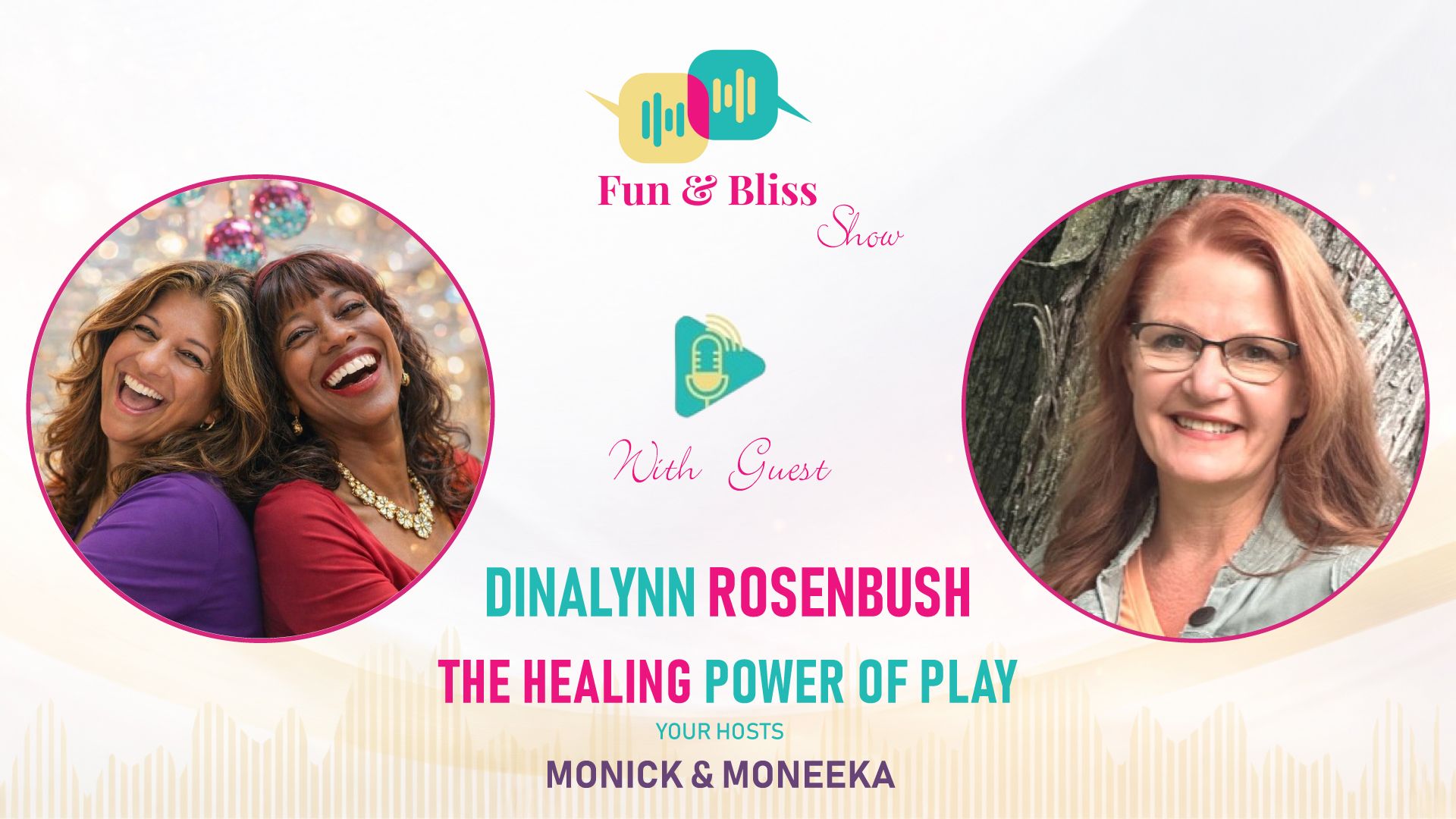
What if play is not simply something we do with toys, games, or coloring books?
What if play is a way of thinking, connecting, communicating, and moving through life?
In this episode of The Fun & Bliss Show, Monick Halm and Moneeka Sawyer sit down with speech-language pathologist, mother, grandmother, and creator of The Language of Play, DinaLynn Rosenbush.
For more than 30 years, DinaLynn has helped children and families communicate more effectively. Along the way, she discovered that some of the most powerful breakthroughs happen when adults stop assuming they know what a child’s behavior means and begin approaching it with curiosity.
A child who appears to be disobedient, destructive, or difficult may actually be experimenting, exploring, or trying to communicate something they do not yet have the words to explain. Instead of immediately asking, “How do I stop this behavior?” DinaLynn encourages parents to pause and ask, “What might be happening underneath it?”
That small shift can transform correction into connection.
DinaLynn also shares her personal journey back to laughter, play, and joy after Lyme disease led to a serious physical collapse. Her experience reminded her that fun is not something we must earn after all the work is done. It can be part of how we heal, care for ourselves, connect with others, and move through even the hardest seasons of life.
IN THIS EPISODE, WE TALK ABOUT
-
How DinaLynn discovered speech-language pathology
-
Why becoming a mother deepened her professional work
-
The difference between doing playful activities and developing a playful mindset
-
How curiosity builds trust between adults and children
-
Why behavior is often a form of communication
-
The danger of assigning adult intentions to children
-
How play can support communication, learning, and connection
-
DinaLynn’s experience with Lyme disease and physical collapse
-
How laughter, joy, and play became part of her healing
-
Releasing the belief that fun must be earned
-
The childhood messages that taught her to take life seriously
-
Giving yourself permission to play as an adult
-
Supporting parents who feel fearful or overwhelmed
-
Focusing on one meaningful step at a time
-
Creating small “drips” of pleasure and play throughout the day
-
Why dancing is DinaLynn’s favorite way to shift her energy
-
The importance of giving children opportunities to practice trust and responsibility
ABOUT DINALYNN ROSENBUSH
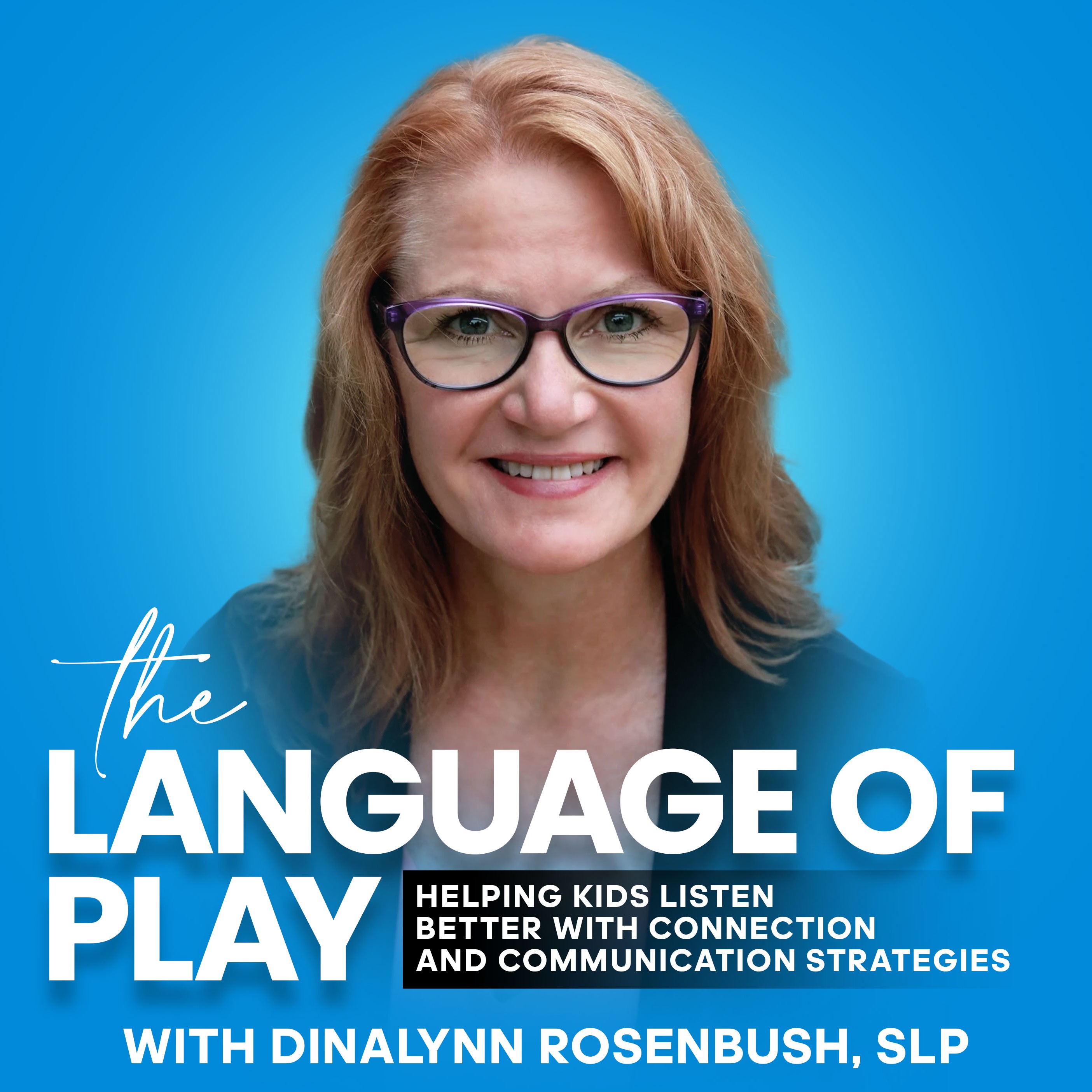
DinaLynn Rosenbush is a speech-language pathologist with more than 30 years of experience supporting children and families.
Through The Language of Play, she helps parents better understand their children’s communication, behavior, and development through curiosity, exploration, connection, and play.
Her work encourages parents to look beneath behavior, presume positive intentions, and create environments where children can feel understood while developing the skills they need.
CONNECT WITH DINALYNN
Website: thelanguageofplay.com
Email: [email protected]
Visit DinaLynn’s website and scroll down the homepage to receive her free resource, Five Ways to Get Your Kids to Listen Better.
The email series shares practical strategies developed through her work with children, particularly neurodivergent children and children with ADHD, and helps parents understand both what to do and why it works.
Episode Transcript
MONICK:
All right, welcome, I'm so happy you're here.
DINALYNN:
I'm glad to be here. I'm excited. Very excited to be with you guys today.
MONICK:
Me too. So we'd love to begin with your story. What first pulled you into speech-language pathology and what has kept you lit up about this work for more than 30 years now?
DINALYNN:
Okay, well, truth be told, it wasn't that I was pulled into it so much as I was that person who had no idea why she was going to college, but there she was. So she took classes. And then I thought, I don't know what I'm doing. So I did a study abroad program back when there was it was the second year it had ever been done. It took five states to come up with 50 people willing to do it. There was no reciprocity with credits yet, so we transplanted our university professors. across the ocean into the University of Birmingham, England, and we had to take the classes from our own professors because there was no way to transfer credits yet. There was nothing that had been organized yet, okay? But that year I played a lot. I traveled a lot. I explored a lot and it was all discovery. And during that year we had one of the communication disorders professors, Cindy Spillers was her name, and she was teaching. And I thought that's a cool class. And then I took another class This is a cool class. This is a cool person. And so then when I came back to the United States after that year, I thought I want to take more from her. And I took more from her. And then finally she said to me in my like third year, fourth year of college, she said, You know, Dina Lynn, you're nearly ready to graduate. It's about time to declare a major. How about this one? So there's that's how I got into it actually. And then
MONEEKA:
I love that and I love how real that is. I had no idea what I was doing. And here I am. And yet you're so committed to it, which is absolutely amazing. yeah. So you've worked with children and families for a long time, right? and then you became a mom and a grandma. that must have changed sort of your perspective on things. How did that change your understanding about communication?
DINALYNN:
I think that when you have you've got this learning behind you, it doesn't become real until you do it, right? We all know that we get our college degree, it doesn't really matter until you're actually trying what you learned in textbooks and you put it into real life. But then when I had my own children, it was like I had a testing ground. That for example, my daughter comes up, my first daughter, and she's three and she's got a lisp, and I had heard that with a three-year-old, you can introduce the right kind of training, the training I had learned, and they'll fix it in three months if you do it right. And you're only gonna practice five minutes three days a week. And I thought, okay, come on. That's not really true. So I let the list grow nice and strong. And then I thought, okay, I'm gonna experiment, I'm gonna play, right? I'm gonna see if it's gonna work because I knew that I knew how to fix it if it got worse. So for me, it was like, it's fine to play. And then and it was right. It did fix. in five minutes, three days a week for three months. And I thought, okay, now I'm going to take a little bit more seriously these strategies that I had been learning and be more strategic on how I implement with the students that I work with. So I started to really lean into what is evidence based and really streamline that. And you know then I get really good results. And it but it started to under I started to understand the streamlining and the strategy.
MONEEKA:
Wow.
DINALYNN:
Because I could practice with my kids. Now, likewise, I would try things with my kids that would make me better a speech pathologist or teacher. And then I would go to workshops and I would think, man, I need to do that with my kid because it's behavior or it's whatever else I don't know about. And so then the training that I would get for working in a school would be applied to my home life. So I think I think it's like a ladder. One climbs up, the other one climbs up, and you just keep on climbing together. Because you learn a little bit and you practice it and you learn a little more and you practice it and you go a little deeper and you practice it. But this practice time for me could be between my home and my students because eventually they were all the same age. I'm loaded.
MONICK:
So you your your business is called The Language of Play
DINALYNN:
Yeah. The language of the way.
MONICK:
I, you know, we're, this is the fun and bliss show, so we're all about fun. So I'd love to hear more about how you use play and, you know, when, how that like, how that like intersects with being a parent or, you know, just not just a practitioner, but a parent.
MONEEKA:
I play.
DINALYNN:
Sure. I think when I started off, I think I understood play as okay, we're playing with Legos or we're playing with the coloring books or you know, those rigid kind of understandings of what play is. And as I got more mature in my understanding of raising kids as well as having students, I started to see that play is much more global. It's it's not just what you do, but now I'm teaching, you know, it's how you think. And when I When I think of so some years ago one of the teachers came to me and he said, and he was teacher of the year, like national teacher of the year, and he came to me and he said, What you do so naturally, we struggle to do. And I thought, What are you talking about? Like I didn't know what he saw. I had no idea. So I went to his classroom like in a couple of days after he had said this to me and I said, What are you talking about? And he talked about relationship. He talked about building a relationship with the kiddos where they trust me right away. And in speech pathology, we just call that build rapport. You know, the first thing you do is build rapport. And so I started analyzing what is it that I do because it shouldn't be hard. It seems nor normal, seems natural, and it all comes back to play. And when I say how you think, how you how you feel, how you interact with a kiddo would be in this realm of curiosity, discovery, exploration, not assuming that what you think is what they think. Not assuming that you know what their intention was. Even when it totally looks like disobedience or it looks like anger, let's pause and just sit back and welcome the curiosity so that you can figure out what else is sitting there. And I think that when I say that piece, that is what has made mountains move in my family. It's what has made mountains move for the parents that I work with. It's learning how to look at their behavior as communication. And then get curious so you can figure out, well, what's underneath that behavior? And the mistake I always see parents make is they think, if I behaved like that, I would feel this way. But that's rarely ever true. Kids don't have the developed brain that we have. They don't have the years of experience of life to be able to think of
DINALYNN:
an experience where you behave like that. So a little thing to a child is all they know. So a little disappointment is all they know. So it's a big reaction. Yeah. So we so we interpret differently.
MONEEKA:
We I really love how you talk about curiosity. You know, like notice we do this also just with body language, right? As adults communicating, there's so much about, you know, that person is is giving us these signals with body language. And we've gotten kind of used to it because of the language of life, right? Like you say, we've lived a lot enough to notice certain things. And children don't have that perception of body language, they also don't have the same responses to their own behaviors or the same intentions, right? So I really love your your idea of Curiosity around all of that. It keeps it very playful. And what I love is that you bring a lot of fun to your professional work, obviously. Yeah. But from what Monique has said, and I understand, you actually have a personal experience around fun and healing for yourself. Could you, would you mind sharing a little bit about how fun has helped you to reconnect within yourself?
DINALYNN:
Yes, I'm happy to. Thank you for that question too, because it's really quite a foundational piece, even in when I thought, What am I gonna do next? And I started to think about a podcast, what would I teach? And as I was talking, I heard myself use this expression, the language of play, and I realized that's a lot of it. And let me back up then and tell you how that came to be. so in 2017, 2016, I was bitten by a tick. And then it was I went to the doingctor, they said that's not Lyme disease. And then in 2017, I had a full body collapse. I became disabled. I couldn't walk, talk, or see properly. I was very sick in bed for most of two years. During that time, I started remembering, and I went to an integrative health practitioner, and then eventually Eastern medicine, where they talked about finding ease, finding relaxation, finding joy, and remembering to do the joyful things. Now, one of the memories that I had during this time was when I had gone through my divorce, I didn't realize I had gotten so serious. You know, I know the importance of play, but I one of my students said to me, Why don't you laugh anymore? And I mean, that was like really shaking me up. I realized he's right. You know, like like the struggles of life eventually can wear on you, you know, and I was a single mom and all the things, and so I was Going through the routines and doing the rhythms. And then the laughter drains away. The joy drains away. And you keep on doing what needed to be done. And then so that happened some years forward, you know, laughter came back. I intentionally put it back in. And then I had been bit by this tick. And I was remembering this. And I thought, I think that's gotten away from me again. There were other stressors in life. I had teenage kids at this point, and some of the things that happen with that stage. And some of the laughter had drained away. And when we allow ourselves to become so focused on the productivity and on the doing that happens, especially when you've got a lot of do that is serious, it you know, it does have a health impact. One of the things that this natural health doctor said to me, he says, Imagine that you've got a jail inside your body.
DINALYNN:
and your white blood cells are catching any pathogens and they're sending them into the jail. And Lyme would be one of them. And he says that's a stealth pathogen. So that means if you get stressed, if you get too much overload, maybe it's gonna be what you eat is unhealthy. Maybe you've had some alcohol, maybe you've just had red food dye. You know, you could have like for me, I had fallen and hit my head, so there's a concussion. I had had relationship stress I also had I was working in the schools and it was progress reporting time, so I had lots of reports to write, you know, like so physical, emotional, mental, all the different things, right? And then that weakens your immune system, which is this jail. And then a stealth pathogen is just gonna reach out, take the guard's key, and run away. And he says that would be a figurative way to kind of understand what happened in your body, because it was 10 months before I had a symptom.
DINALYNN:
And then when I had a symptom, I really had symptoms. So when I think of what leads us into being weaker, a lot of a lot of it can come back to have we been nourishing ourselves with joy? Have we been fortifying ourselves with having the fun, having the blisscipline as you guys talk about all the time? So yeah, the having the having those parts of you nourish, just it's like a cool glass of water, isn't it, when you're warm and thirsty.
MONEEKA:
Was there a moment when you really you thought to yourself, wait a minute, fun isn't extra, fun is actually necessary. When there was an actual like s was there a switch or was like what was that like for you?
DINALYNN:
Honestly, it was kind of like a slap in the face because I knew it.
MONICK:
Uh-huh.
MONEEKA:
Okay.
DINALYNN:
You know, like I've worked with children, I know this, but for some reason it was like, it's me too. I qualify. I count also. You know, sometimes as a mom, we get into you need to do this and you need to do this and you need to do this. And as a single mom working full time, you know, like there was I didn't give myself liberty for that space. I was doing what needed to be done and I was the hub of the wheel, the hinge, whatever you call the full growth, you know, the part that anchors everything together. And so I didn't I thought somehow I was exempt from the ability to have fun. You know, I felt like when I would go out with girlfriends or go out someplace and I got a babysitter. It was like I had to pay the price afterwards in cleaning the house and catching up with homework and whatever needed to be done. It felt like there was a price to pay for having fun. So I just kind of didn't allow me to have that. And so waking up to that was like a slap in the face because I had been teaching it to others. I had been showing others. I knew it. But how do you exempt yourself? How do you get into that place where you think that way? I don't know. But it happened.
MONICK:
So what shifted when you started to allow yourself to have the fun when you realized, you know, as the healer recommended, you needed to tap into that joy, tap into the fun. How did that shift things for you?
DINALYNN:
well that was huge. I it really what it was was letting go of feeling guilty when I would do something that was fun. That was a big part of it because I felt guilt for that. And then saying, It doesn't matter if the dishes aren't done now. It's the sun is shining, so it's time to get in my kayak and paddle.
MONEEKA:
Sure.
DINALYNN:
You know, like right now the sun is shiny. I live in Minnesota. When the sun shines you get out and play. Yeah.
DINALYNN:
So I did it. And then I started allowing myself to and releasing that very trained up from childhood type of guilt that you have when you think this is how it is. Especially when it's subconscious and you don't realize how deep it is.
MONEEKA:
Tell us a little bit about that childhood. You started to tell us that in the green room, but you grew up with some really serious ideas about fun that obviously you're not living today, but talk to us a little bit about those.
DINALYNN:
Yes. So well, my when I grew up, it was always you have your work done before you play. You have your work done before you can have fun. And of course the work is never done, whatever the work is. And so there really wasn't room for fun. Then as I got a little bit older, say about the age of twelve or so, then it kind of shifted. So let's say there's a family gathering and after the family gathering, the men would typically be able to go enjoy and talk and whatever they're gonna do. But I cleaned the kitchen with mom. I, you know, cleared the table. I did those kind of things. and it had to do with me being female. And then I got a little bit older and I had kids. And my mom would say to me, don't do that, the kids get that. So for example, I remember on my fortieth birthday, I brought the kids to a climbing wall. And I by this time I was playing a little more, you know, and I got into a harness with the kids to climb. And my mom says, You can't do that. You're forty. Get off of there. And I'm like, Mom, I'm only 40 and I can do this. And but she says, and you know, so it was all the things, you know, y you're a woman. And you know, the harness is there hanging on to your butt and your hips and whatever. And so she said, You're a woman, get down. And it was all of the things. And it was like light goes on in my head. Holy cow, this is deep. This
DINALYNN:
You know, like even as an adult, she's telling me what I can't do. So that was something that kind of was really a a pivotal moment for me. And another thing that happened was when I first got married to my husband, I still loved to like watch some of the kid movies. And when we had children, I you know, like they wanted to watch some of the Disney. I still kind of enjoyed that. Not kind of, I do enjoy that, and I do still. And he very much was somebody that wanted to sit around a campfire with a beer. Now It's okay to sit around the campfire. I'm not much of a drinker, but still, you know, like I enjoy that. But I like variety. I also like these other things. I also want to do these other things. And he had shifted somehow in his life, so I assume he had one of these stories embedded in him too. That, you know, 'cause when we were dating, there's a lot of play. And somehow, once the kids came, it's you don't do that anymore. Stop being so childish. was what I would hear. And my brother repeated the same thing. So it was all over how I grew up. You know, don't be so childish. Don't be don't play. That's for children. You're not to have fun till the work is done. You're a woman, you don't get to. Like that kind of stuff sits in your in your subconscious a lot deeper than a person realizes that it's there. And so it's been pulling weeds out of me for a long time. Or I've been. Yeah.
MONICK:
I know that there so many people listening who completely relate to that, to those messages about, you know, it's fun not being okay, right? That's just, it's not something you do maybe a little bit on the weekend with a beer. Like generally it's not something that women are supposed to do, adults are supposed to do, et cetera. So how... Were you able to shift that because you've had that shift because you do embrace play and fun and in the work you do and in your life. So what helped you to be able to pull out those weeds or ignore those messaging to live a life that's fun and blissful.
DINALYNN:
I think it was meeting people that thought differently and that I could express some of that too. It was finding times and space to do adventures with people and have it be so much fun that there was no way to deny that this was good for me. And it was when I came out of that illness, it was really feeling in my body how much different I felt when I took time. To take care of me in ways that were joyful. Obviously, I needed to take care of like cooking, for example. And I could do that begrudgingly, or I could play with herbs, play with the different styles, use the time differently and choose that it's going to be a fun experience. learn my grandma would always say to me, Cook with your nose, Dina. Don't wait for the timer, wait till it smells right. And so I leaned into a lot of Let's see, would grandma say this smells right? And just shut my eyes when I'm clicking. I think it's done. You know, so even little things like that to keep keep the joyful piece flowing throughout the day. Not just not just like having, I'm gonna do something fun in the day, make sure you do something fun every day. I agree with that. But I'm not at that point anymore. Excuse me, at that point anymore. I am at in as much as I can, no matter how chaotic and crazy life can be. Laugh at it as you get through it. And sometimes crazy happens, you know, it does. And if you can if you can find the link that's going through it where you can say, okay, it's crazy and the sun is shining and the squirrels are dancing outside. This is all right. And then just laugh at the chaos as you enter it when you need to. You know, like it's just not as harsh as it used to be.
MONEEKA:
Yeah, I love that how you kinda like laugh it off. For me, I will say to myself, Yep, I'm crazy. Yep, I did that. And yep, it's okay.
DINALYNN:
It's like laughing it in in a way, you know, not laughing it off and blowing it off, but laughing in the presence of what you still need to deal with if it's not working, whatever it is. But you can laugh with it as it's happening, 'cause you can't laugh everything away, but yet you can have it with you while you survive it and while you then flourish in spite of it. Or even because of it. 'Cause I would say that Lyme, the laughter, joy, play, fun. Bliss, all of that, blissciplines especially 'cause I didn't have any blissciplines, I would say, before that. But now I get that and I think that it's it's a movement throughout my day.
MONEEKA:
I love that. Yeah. Dina Lynn, I actually say frequently to people that I know, smile often and laugh loud, you know. So just keep that laughter going. you know, this show is about bliss of plans. It's fun and bliss and the practices. So it's not just the feeling. When you think about the families you've supported through the years, where do you see fun creating the biggest shift for them?
DINALYNN:
I love that question. So when parents come to me, they're usually coming to me fearful, they're scared, they're wondering about the kids' future, they don't know, and I'm and if I'm working in the schools, I'm gonna hand a diagnosis that they don't want to hear. And sometimes there's relief in having a diagnosis, but at the same time, you know, like to tell your parents that their child has a disability is is not really a welcome. Phrase, is it? It's not really a welcome label. So I think that one of the things that we remember is is to help the parent realize that this is forward momentum. That when we when we figure out where your child is at right now, this is awareness. We are learning where our starting blocks are. But your child is always in perpetual motion. They are moving forward. Because they are young, it's not like when you work with older people, how you know you can go backwards and forwards, you know, in your progress and in your growth, because we can do that as adults more. Children are so naturally propelled forward. So they are always moving forward. So when we look at our kiddos and we have a label or or and they're scared, and what are we to do? The reframe of saying, now we know that this is the starting blocks, this is. where we go from here is only up. And here are some ways to do it. And then parents start to understand how integral they're relaxing, accepting, and allowing is for that child to grow. They have a different focal point. And then, you know, they were focused on the what ifs and the bad and what isn't there. But now we need to shift to see what is there and learn how to use that strength, whatever that is. To springboard up and up and up into the next skill areas that those kiddos need. Does that make sense? Did I say specific enough and yet vague enough? Okay.
MONEEKA:
Do you specifically integrate fun in those transitions and in those conversations or anything like that?
DINALYNN:
I definitely have it in the conversations because I think just like me, parents get busy and we can get away from being the joyful part of who we are, and we all have that in us. So it certainly is part of the conversations with parents. I think that when I work with kids, I don't talk about it. We live it. We have it, we be it. We learn to use games in in ways that Well, like one of my philosophies is that a kid is going to learn best when they don't know they're learning. So if you are able to to embed their lessons into Candy Land or or embed it into hopscotch on the floor, you know, depending on what they're working on, you can embed language because that's communication and it doesn't matter what you talk about. You know, it's doing it in a way that you are going to meet their needs. So if it's sounds, you're gonna work on sounds in that setting. If it's sentence structure, you're gonna work in that in that setting. If it's voice, if it's fluency, if it's you know, like whatever we're working on in those areas, you can apply it to sidewalk chalk. You know, it just doesn't really matter. And so learning to do it in a way that you're okay with not using your standard protocols, but rather real life, human to human, and laugh as you go through it. Stop, get serious. They focus, they learn, and then it's joy again.
MONICK:
You know?
MONICK:
So good. I think for parents, there can be a lot of pressure, especially when a child is developing differently than what's normal or typical. And so when parents are feeling very behind or worried or overwhelmed, what would you love for them to know or remember?
DINALYNN:
I think that when overwhelm excuse me, when overwhelm is present, I think the idea of breathing and remembering that's your basis. We all just need to pause and breathe for a little bit. Because all of us can just step at the pace we step. And when we are overwhelmed, we're looking at all of it at once and we want all of it fixed now. And so to have a person, a a group of people, a way for us to to be together or find a group, find a tribe, find other parents that are whether they're dealing with this particular thing or not, we all get overwhelmed. But when you're dealing with issues and you have people with similar issues, you feel a lot more support. So if you can be in a setting where you can not get into the complaining circle, which sometimes happens, but rather have it be like I have a a group of parents that we're forming and they talk to each other in a way that, you know, it we can correct one another if we get on the tangent of complaining. You know, help each other remember to refocus. And then try to we help each other remember one thing at a time, which is the one thing we're gonna focus on today. And You once you get that done, you can focus on something else. But what is the one thing? And constantly come back to, okay, right now, you know, during mealtime, our one thing is we're gonna get this food in the child's body. So maybe it's gonna be an airplane, maybe it's gonna be, you know, whatever it is. If that's the critical issue. If you're trying to teach this child to eat neatly, the one thing might be, No, you're gonna hold the fork. You know, it's just what is the one thing at any given time in the day? And I think that clears off a lot of personal expectation of self because every parent that I meet that comes to me, they have beautiful hearts. They want to do everything. They want to do it yesterday. And they want to help their child. They want supernatural help. And, you know, we all are just human. We're gonna move at the pace we move.
MONEEKA:
No. That's so true in every area of life. All yesterday and we can only move in the pace that we can move. being human is not a fault. It's
DINALYNN:
Exactly. Beautifully said. A being human isn't a fault. It is something to and that's been hard for me too, because I've always had this idea that I should be able to do it all. Mm-hmm. And having the experience with Lyme, that was a huge w another, another of many huge wake up calls during Lyme. I'm not expected to. I'm expected to be the best me, nothing else. And saying no is okay. In fact saying no is very healthy.
MONEEKA:
That's right.
MONEEKA:
Right, setting those boundaries and saying no. Yeah.
DINALYNN:
Yeah. And for us to tell ourselves no is equally important.
MONEEKA:
I love that. Yeah. Dina Lynn, you talked a little bit earlier about the way that kids act and how we interpret it, right? could you give us a little bit more details on what are some of the ways that a child might communicate that he's struggling communicating that might not be obvious, right?
DINALYNN:
Yes. I can do that. I'm trying to pick which story in my head right now. Because then all the stories come. Okay, I'm gonna pick one. one of my students at the time he was in third grade and he was sitting in the gymnasium as it was time to leave the school. And at the time it was winter and again I live in Minnesota, so you know, get the kids up and moving and so they could either walk around the circle in the gym or they could sit along the wall, whatever they choose, while they're waiting for the bus and so about You know, depending which bus they took, five to ten minutes that the kids were waiting there. Well, this kiddo was watching people walk in front of him, and then he stuck his legs out into the walkway where the kids were walking. What does it look like? Looks like he's trying to trip children. He got disciplined for trying to trip children. And then I learned about it a day or two later, and I know this child. He's got a heart of gold. Absolutely sweet, would never try to trip children. So I went and I found him and I just sat with him and I said, Hey, I know you weren't trying to trip children. What were you looking at? And he said to me, again, the curiosity thing, you know, just believe in him and just go ask. And he looked at me like wide eyed, because it w I was the first person that asked him about his own thoughts. rather than labeling what his thoughts were. Because again, as an adult thinks, if I was to do that behavior, I would be intending this. Right? Children aren't like that. He said, Well what I was doing was I was watching the lines on the floor. You know, there's cracks in the floors. And he said, I was noticing that the kids never walked on these cracks. So I thought, I wonder if they'll walk on my legs if I put my legs there.
MONEEKA:
Wow.
DINALYNN:
You know, like and really you're thinking, okay, now if I wind this out, he's doing probability. I thought to myself, that is absolutely childlike thinking, right? I wonder if is childlike thinking can they necessarily process that, this other thing might happen? No, that's not even kids don't think that far ahead, right? We've heard the phrase they can't think past Friday. Well, most kids can't think past like this.
MONICK:
He's like...
DINALYNN:
Minute, this hour, this 10 minutes, whatever it is. And so he was just literally wondering if people would step on his legs if he put his legs there because they were never stepping on the crack. There wasn't any thought further than that. And that's what I so often have to teach parents. When our children are doing things, what they're experiencing is probably really close to them in the timeline. And they probably are not thinking any further. further than that thing. They're not thinking how anybody else is feeling or reacting to them. They are probably just looking at this little moment with their little bit of learned experience, and that's all they're thinking. Another child was he had taken a mallet and he was hitting, just totally destroying the cement blocks his dad was going to use for patio. Like just destroyed them. And he was so mad and he told me about this. But again I thought, nah, I just don't believe that's what the kid was intending was to destroy. And so I asked him to tell me about the blocks. And at first he's like, you know, just kind of scared, take a deep breath, like he thought he was gonna get in trouble again. And I said, Well, no, I know you're not in trouble. I know you were doing something cool. What were you doing? Again, his eyes opened up and he said, Well, they sounded different. I said, What sounded different? He says, The little blocks from the big blocks. So, and then I'd ask him, so when you smashed them, the little and big blocks sounded different? He'd say, Yeah. And so he kept on hitting them, and so that means I kept on smashing them smaller and smaller, which meant they kept on sounding different, so I kept on doing it. Well, guess what they were doing in music class? Wooden blocks and mallets. They had large blocks and small blocks. He got home, he saw a hammer, he saw blocks. He just did what he had learned at school. This had nothing malicious involved. He was simply taking what he was learning at school. And applying it to something at home, but he doesn't have judgment yet, does he?
MONICK:
What you're talking about, mean, one is in terms of trying to get inside the head of the kid, but there's something else that I hear, which I think is so beautiful, which is acceptance and seeing the best possible in someone. I remember when my daughter was younger, somebody told me, you know what, every kid just wants to be accepted for who they are, right? That's not found wrong. that is such a gift. you're just in the whole, the curiosity, it's like, I'm just going to presume that there's nothing wrong with this child, right? They're not malicious. They're not trying to be troublesome. They're mean, well, but there's something like.
DINALYNN:
Right, right.
MONICK:
they have a curiosity and they have something that they're trying to experiment or learn about in this world. the consequence they might not have thought through, right? there are consequences to what they're doing, but it's that ability to see, to see the better, know, presume the best in them. And that's a real gift. think everyone is ultimately, I'd be accepted and loved and appreciated for who we are even when we do something and the outcome might like, oops.
DINALYNN:
We all do things where our outcome is not what we expect or want. Yeah. And we couldn't see that far ahead. It's just that our runway is longer as an adult. But it's essentially we're kind of the same.
DINALYNN:
Yeah, it's good. And one of the other things I find with kids, and all of my work has been done with kids, when you if you want a child to become trustworthy, you have to give him something that you trust him for so he practices. If you want a child to grow up with certain skills, you have to give him the experience of doing the thing before he's ready. Right? Yeah. And so we have to presume if we want them to grow in this direction, whatever the direction is, that it's there, so that they grow into it, so that they uncover it. If we want them to grow well into those directions, we give that to them, so that which is within them can bloom. Yeah.
MONICK:
Love that. I want to ask you about, sorry, your habits, your rituals, your ways of being, that you didn't always have them. now, what are some of your personal disciplines, your habits that help you feel lighter, steadier, more joyful?
DINALYNN:
Your discipline.
DINALYNN:
Well, like I said, it's kind of like all day long now. It is all day long. So if I was to think about the morning time, I allow myself I'll just kind of walk through a day and see if I can pulse them out. So if I start my morning, I indulge myself with a wonderful cup of coffee. So if I'm gonna bother making coffee, I am going to put stuff in it that I really like. But I also a blisscipline for me is to not let myself have too much caffeine or too much sugar because I know that I feel rotten. So I have like wonderful flavors that I've learned through herbs and stuff like that to put into my coffee and I change it up and all this stuff. So start off the day with whatever drink you like, but make it something luscious. You love it. Then since we're talking food now, if I'm gonna make myself lunch, I'm going to take those extra minute or thirty seconds and I'm gonna put in herbs and you know like make it seasoned nicely or add the extra onion or the you know brown it or do something so that it has that extra to it. So you know let's say for eating and drinking that would be that. If I'm going to go outside I'm going to not just dress the weather but I'm going to dress something that feels good to me. You know I'm not gonna bother carrying what I necessarily look like or a match or whatever it is. If I'm saying I'm gonna go to the woods, I'm gonna be, what do I actually feel like wearing today? And I'll think something sometimes, you know, it's warm and cozy. And other times it's like, I just want the wind in my hair today, you know? And allow myself to just be however I feel that way. if I have a a meeting with somebody, give myself an extra 10 minutes to arrive and settle in. to have the glass of water, to do whatever I'm gonna do. I meditate, I have an infrared sauna, I go for walks in the woods. Woods is huge. I dance every week and sometimes more than once. I would love it to be daily. Well I guess at home I probably dance daily, but like to actually dance with humans. Once a week is probably all I can manage. music, let's see, what else?
DINALYNN:
on my here's the thing, just on my bed I have the coziest and most luscious duvet and I like getting hot under that duvet, but I love my window open and the cold in my face. The simple little thing that I love. So if the heat is on, I'll throw a pillow over the heater vents and then I'll open my window because the other people in the house don't have to freeze because I like the cold air. But I'm going to have my bed cozy warm because I like it that way. And open the window and have the cold air and then wait to the sound of the birds. I love that. You know, so when I think of the blissciplines, I think of it for me anyway, more as doing the things that I know that are gonna make me feel healthier and maintain health. And also doing the things that are just fun, allowing myself yes. You know, the things that I wasn't allowed growing up. I tell myself, like I'm talking to a child sometimes. You do too get to do that, Dina. So it's kind of it's kind of speckled throughout my day and of course I still work and do all the things that I need to do, but that's why it's like little drips everywhere. That's what I try to do. Maintain the drips.
MONEEKA:
Maintain the drips. And sometimes, I know Dina, because you're so committed to your work and I know that this happens with me too. Sometimes life still gets too serious or too full or too heavy, right? Do you have a strategy that kind of takes you out of that and brings you back to yourself in those moments when the drips stop?
DINALYNN:
When the drips yeah, when the drips it's more like when the drips just don't do the job of lightening me up. Right. And my one go to always is to go dance and I'll go someplace into town where there's humans that I will dance with people until I am dripping wet with sweat. That's that is always a thing that can shake me out of not being okay. Because yes, just like you, you know, it happens probably every week at some point. I'm like I need to go take get out of here. Like I have to what is it? Express the negative energy or something? You know, like it happens. Yeah. To all of us. Right. And so for me, I think probably the number one thing that I can do is dance until my body is dripping with sweat.
MONEEKA:
that we can relate both both Monick and I. Yeah.
DINALYNN:
No, you guys love to dance.
MONICK:
biggest to dancing. I don't do that. We do our meetings and dance right? Dance it in and dance it out.
DINALYNN:
Yes. Yes. And I've listened to your podcast. I've listened to several episodes now. It's been lovely. I find it to be really uplifting. And I hear about you talking about your blissciplines and dance comes up in every episode that I've heard so far. Yeah.
MONEEKA:
You figured us out.
DINALYNN:
It is. I don't know. You combine music and body movement. I do not know how a person could not feel better.
MONEEKA:
I feel like you shake all those thoughts out of your head into your body. Like you're literally shaking it out of yourself so that you're in your body. You know? It's it's so yummy.
MONICK:
Emotion shifts emotion.
DINALYNN:
Yes. I forgot to say one other thing that is huge for me. And that is I've got grandchildren. And so when you get together with them, they just giggle when I walk through the doingor. It's like I'm some superbell. Yeah Yeah, exactly. And so how do you not feel good when you've got a little kid belly laughing? You can't help but just start laughing. So that's also a thing that when I don't feel well, I'm like I call up my kids. I just need some little kid time. It's different than when I'm working. You know, it's free. It's easy.
MONICK:
All right, well, I would love if you could share for the listeners, like something tiny, meaningful, they could actually try. Like if you were gonna assign somebody a little fun spark, not homework, it's just something that they could experiment to shift their energy, what would you suggest?
DINALYNN:
I think one of the things that I would suggest would be and I there's so many things that a person can do. But I think that I would talk about laughter. And I think that I would talk about it from the perspective of train yourself to laugh. If you've gotten into this point of life is too serious, then when you're driving your car, you know, when you're laughing in the car, everybody just thinks you're talking to somebody on the cell phone anyway, right?
DINALYNN:
They think you're on your car phone. So you can say anything and talk about anything in the car. You just look like everybody else that's talking to somebody. So you don't have to worry about what you look like there. But you give yourself start with 10 seconds. Can you maintain laughter for 10 seconds without stopping? Yeah. Just try to do it. I think if you want one little piece to start somebody on that on that path of getting out of a funk, I think that ten second laughter is something that Can shake us loose a little bit. So there's a what and you wanted a small piece, so there's a small piece.
MONEEKA:
So good. It's so good. I love that.
MONICK:
Yeah, amazing.
DINALYNN:
Perfect. Okay.
MONICK:
I think it's time for the Fun & Bliss lightning round.
MONEEKA:
Here we go.
MONEEKA:
You want me to start? Okay. So, do you like to go by Dina or Dina Lynn?
DINALYNN:
Professionally I am by Dina Lynn, but my kids call me Grandma Dina, so it's kind of everywhere between. My preference just seems to be who it comes from. Yeah.
MONEEKA:
May I call you Dina? Now we're at the end of the show. Should have handled that first, but anyways, okay, so Dina, what you go to when you need an instant joy boost? I know you gave us a couple, but I real quick.
DINALYNN:
I Yeah, I did. It's gonna be dancing, it's gonna be laugh, and then it's gonna be outdoors. It is always getting outdoors. Mm-hmm. Walk in the woods.
MONICK:
What's one thing that never fails to make you laugh?
DINALYNN:
My grandchildren.
MONEEKA:
So good. So Dina, finish this sentence. Bliss for me looks like
DINALYNN:
I love this. And this actually I learned from your show, it kinda like woke me up to realize that I had like a connotation of bliss that had to be zenned out. And I thought that's not my normal personality.
MONICK:
The monk on the mountain.
DINALYNN:
So I like I learned this actually from you guys and I thought, of course, wake up. It doesn't have to be zen out. So bliss to me is simply that I am feeling joyful and healthy. It is vitality.
MONEEKA:
Mm. God, I love that. I just love that. And I'm so glad you learned it from this show.
DINALYNN:
I didn't realize I had such a negative connotation until I heard you guys use it in a different way and I was like, that word can be used that way.
MONEEKA:
So validating Dina, I'm just saying.
MONICK:
People do think of it as like the, you know, sun is meditating on the mountain tops and the sunrise. Levitating.
DINALYNN:
Is you know.
MONEEKA:
Well though levitating would be kind of blissful. I don't know.
DINALYNN:
No, it that is a form of bliss.
MONICK:
All right, next question. What's a simple playful thing parents can do that costs nothing?
DINALYNN:
boy, that's like saying which grain of sand do you want me to pick up on the beach?
MONEEKA:
Give us one good one.
DINALYNN:
I think that asking the questions, when you get curious about what your child is doing, it costs nothing. But the element of play is your curiosity. It is your exploration. And there's so much bonding that happens for you and your child when you show the interest and then be quiet. Let them answer. And don't correct them. And when it comes out absolutely nuts and crazy, say that's interesting. Not that doesn't make sense, but that's cool. Tell me more.
MONICK:
So.
MONEEKA:
One word you wish every parent would remember when communication feels hard, like in those moments you just talked about.
DINALYNN:
Explore. Explore. Think of it active exploration. I like that word because to me, exploring is more like an ad like as an adult when we think of that word, we think of as active. When we think of curious, we think of just thinking. But I want people to be actively curious. So explore what actually might be there in addition to what you think or see.
MONEEKA:
I love that. That's so good.
MONICK:
right, Dina, what's the best way for people to connect with you or find out more about your work?
DINALYNN:
Thank you for asking that too. Connecting with me is simple. It's hello at thelanguageofplay dot com. My website is thelanguageofplay.com. So that's easy. And anybody can email me. Yes.
MONEEKA:
Is there a gift that you'd like to offer that's on that site or something you'd like to offer?
DINALYNN:
Yes, there's on the site on the home page, just scroll down a little bit, and there's five ways to get your kids to listen better. And I created that out of the what I had learned from working with kiddos that were neurodivergent, particularly kiddos with ADHD. What is it that we as parents do that changes how they listen? And so it's a five a six email sequence where you learn the five strategies, but then you understand the what and the how. with each subsequent day. And it's been really helpful for people. I love that. I've gotten a lot of feedback that has been helpful.
MONICK:
Amazing.
MONEEKA:
Thank you for that.
DINALYNN:
Yeah, yeah.
MONICK:
All right, this has been such a joy. Thank you for coming and sharing your joy with us.
MONEEKA:
Your laughter.
DINALYNN:
Yeah, it's a joy to be with you guys. When you guys when we talked about me being here, I was like thrilled, just so thrilled. I thought I get to meet Monick and Moneeka and Monique, I know you, but I thought I get to meet Monick and Moneeka. I just think that it's fun really fun. It is. It's in and of itself. Your name of the podcast is fun, your names are fun, it's all just fun. Well thanks for being
MONICK:
I know.
MONICK:
You're here and having fun with us.
DINALYNN:
Pleasure, for sure.
Ready for more fun, connection, and aliveness in your everyday life?
Come join the Fun & Bliss Collective, a joyful community of women choosing to stop postponing joy and start making fun a regular part of life.
Join the Fun & Bliss Collective and find out more
